As an Amazon Associate, we earn from qualifying purchases. Some links on this site are affiliate links at no extra cost to you. Our recommendations are based on thorough research and editorial judgment.
Do Noise Cancelling Headphones Protect Your Hearing?

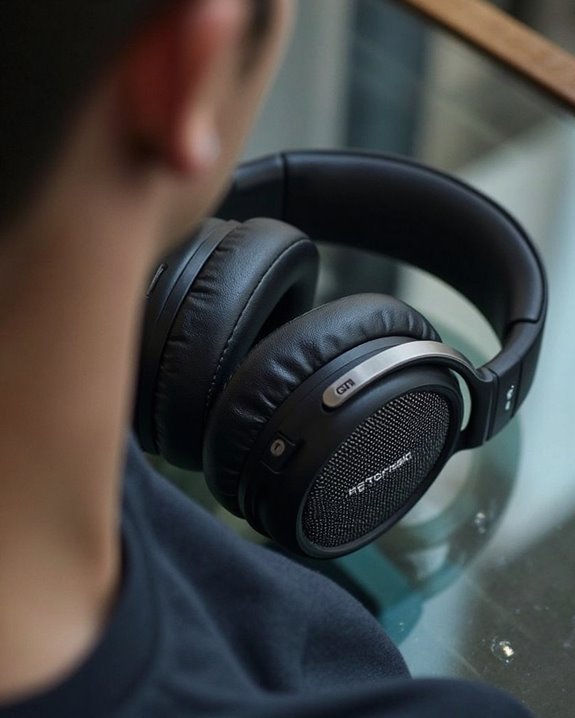
Noise-canceling headphones provide limited hearing protection through dual mechanisms. They actively neutralize low-frequency sounds below 1kHz and passively block higher frequencies, enabling lower listening volumes that reduce potential hair cell damage. While effective in everyday environments like commutes or offices, they cannot replace professional hearing protection in high-decibel settings above 85dB. Their primary benefit comes from reducing the need to raise volume to overcome background noise. Understanding their capabilities helps determine appropriate situations for their use.
Key Takeaways
- Noise cancelling headphones can protect hearing by reducing overall noise exposure, allowing for lower volume listening levels.
- They offer dual protection through active cancellation of low-frequency sounds (below 1kHz) and passive blocking of higher frequencies.
- While effective for everyday environments, they cannot adequately protect against extreme volume levels like concerts or construction sites.
- Unlike professional hearing protection, noise cancelling headphones lack certified Noise Reduction Ratings (NRR) for standardized safety assurance.
- Follow the 60/60 rule with these headphones: keep volume below 60% and limit listening sessions to under 60 minutes.
How Noise-Canceling Technology Actually Works
You may be interested
10 Best Active Noise Cancelling
July 5, 2024
How exactly do noise-canceling headphones create a bubble of quiet in a noisy world? The process begins with strategic microphone placement on the exterior and sometimes interior of the headphones. These microphones detect ambient noise before it reaches your ears.
Once captured, the noise signal travels to processing circuitry where it’s inverted to create an “anti-noise” signal with the opposite sound wave pattern. Small amplifiers inside the headphones then generate this opposing sound wave.
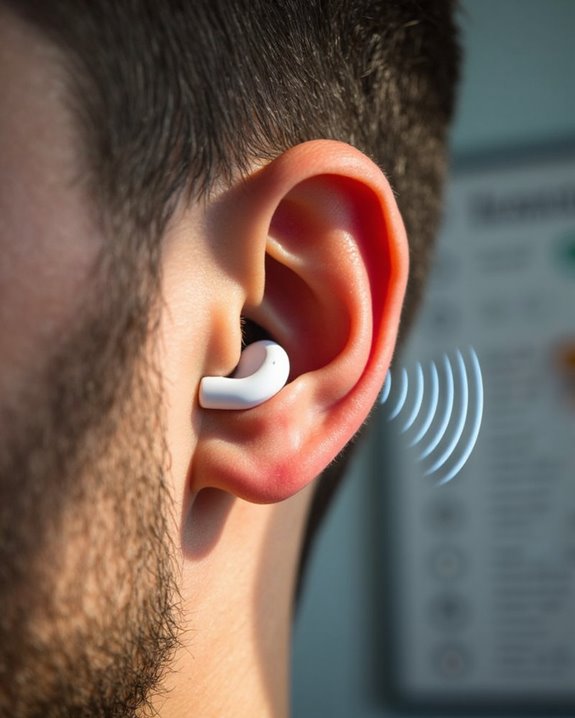
When the original noise and the inverted signal meet, they effectively cancel each other out through destructive interference—a physics principle where opposing waves neutralize one another. This active noise control process works particularly well for constant, low-frequency sounds like airplane engines or air conditioners.
The amplifier role is essential, as it must precisely match the amplitude of the inverted signal to the original noise for effective cancellation. Many advanced headsets now incorporate AI-powered algorithms to dynamically optimize noise reduction in real time for enhanced user experience.
The Science Behind Sound Reduction at the Eardrum
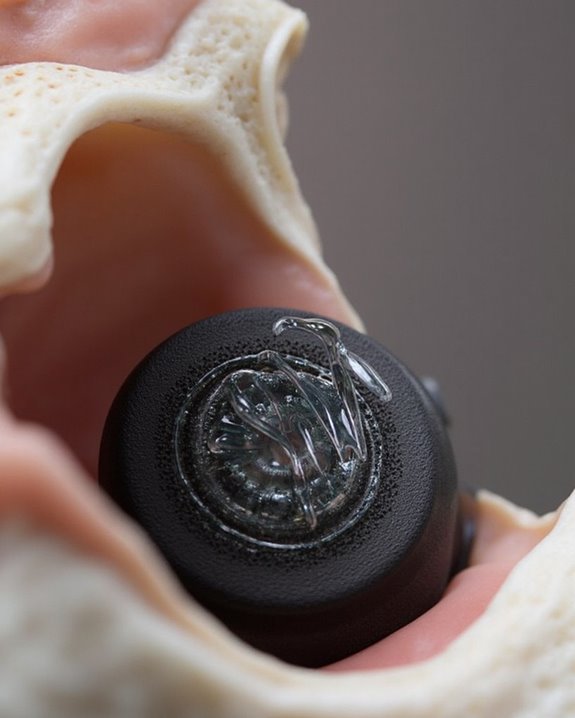
The eardrum experiences profound relief when noise-canceling headphones effectively reduce unwanted sound before it reaches this delicate membrane. Eardrum physiology benefits greatly from the combination of active and passive noise reduction technologies. The tympanic membrane, measuring only 8-10mm in diameter, responds to pressure changes that create acoustic resonance—which noise cancellation disrupts before damage occurs.
At the biological level, noise-canceling headphones provide two critical protective mechanisms:
- Active cancellation neutralizes low-frequency sounds (below 1kHz) through destructive interference
- Physical barriers block higher-frequency sounds that ANC cannot effectively counteract
This dual-protection system creates a greatly quieter environment for the eardrum, reducing potential damage to the sensitive hair cells of the inner ear. For continuous noise environments, this protection can prevent the gradual hearing loss associated with chronic exposure. Many advanced models, such as the Soundcore Space A40, automatically adjust their noise cancelling levels by detecting external noises, further enhancing protection and comfort.
Comparing Noise-Canceling Headphones to Professional Hearing Protection
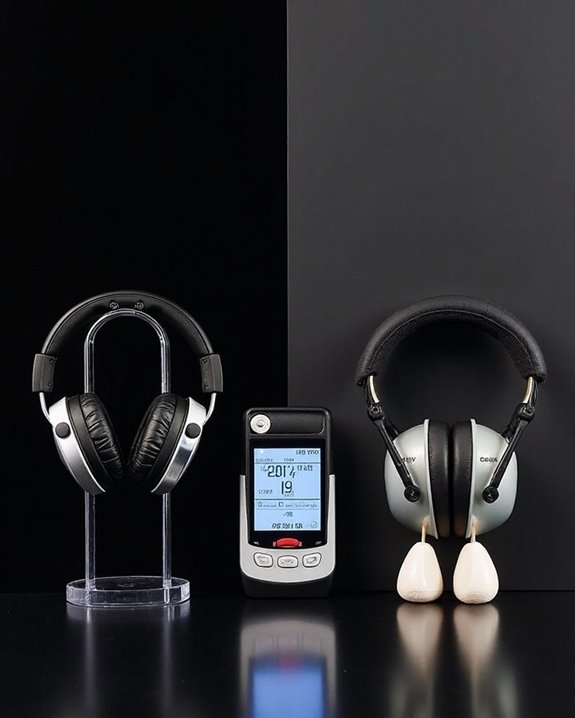
When comparing noise-canceling headphones to professional hearing protection devices, several critical differences emerge that impact their effectiveness in safeguarding hearing health. While noise-canceling headphones excel at reducing low-frequency sounds below 250 Hz, they lack the certified Noise Reduction Rating (NRR) that professional earplugs and earmuffs provide.
Professional hearing protection devices utilize passive noise isolation, physically blocking sound across a broader frequency range, particularly excelling at mid and high frequencies. Regarding Cost Comparison, noise-canceling headphones often represent a higher initial investment but serve dual purposes of entertainment and limited noise reduction. Comfort Differences are notable as well—headphones may cause fatigue during extended wear, while properly fitted earplugs designed for long-term use can be worn comfortably throughout workdays in hazardous noise environments. Additionally, factors such as Noise Reduction Rating and sound quality preservation are crucial when selecting effective hearing protection for concerts or noisy environments.
Recommended Products

Pliable, tri-flange design helps provide a secure fit to help block out hazardous noise
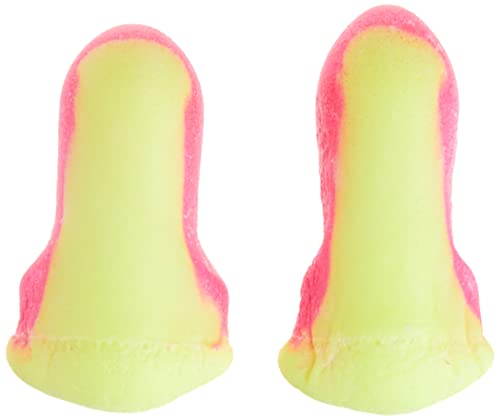
LASER LITE HI-VIS COLORS: Vibrant yellow & magenta color is highly visible from a distance to help ensure employee compliance and hearing safety; it also helps prevent loss or misplacement

Safety material: made of quality silicone with plastic banded, this band earplug is soft and comfortable to wear, durable and lightweight, which can last for long time to use
Environmental Factors Affecting Noise-Cancellation Effectiveness
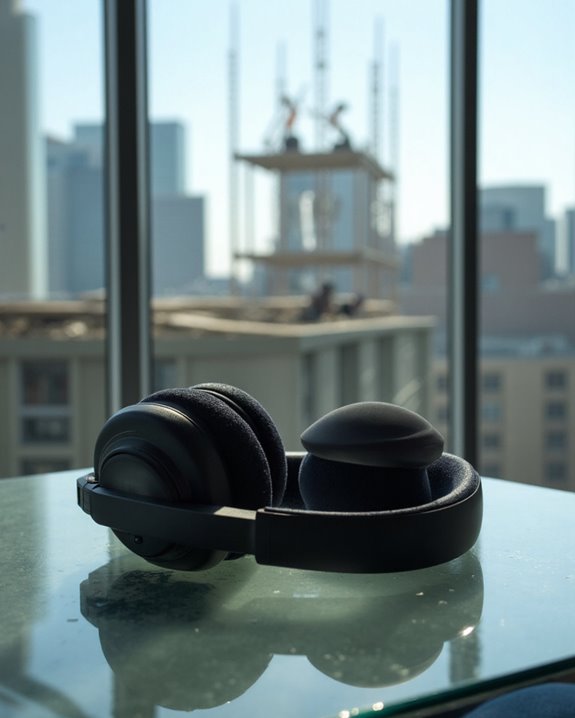
Numerous environmental variables greatly impact the effectiveness of noise-canceling technology in headphones, creating distinct challenges for consistent performance across different settings. Ambient noise variability presents a fundamental obstacle, as constantly fluctuating waveforms make perfect cancellation technically impossible.
Weather Effects notably influence performance, with wind interference disrupting microphone input and humidity potentially affecting electronic components. Additionally, Seasonal Noise patterns—such as summer construction or winter HVAC systems—create predictable yet challenging sound profiles that noise-cancellation algorithms must address.
The efficiency of noise-canceling technology varies based on sound pressure levels, with superior performance typically observed in low-frequency ranges. Microphone placement and sensitivity further determine how accurately ambient noise is captured and subsequently neutralized through anti-noise wave generation, particularly in dynamically changing acoustic environments.
Low-Frequency vs. High-Frequency Noise Reduction Capabilities
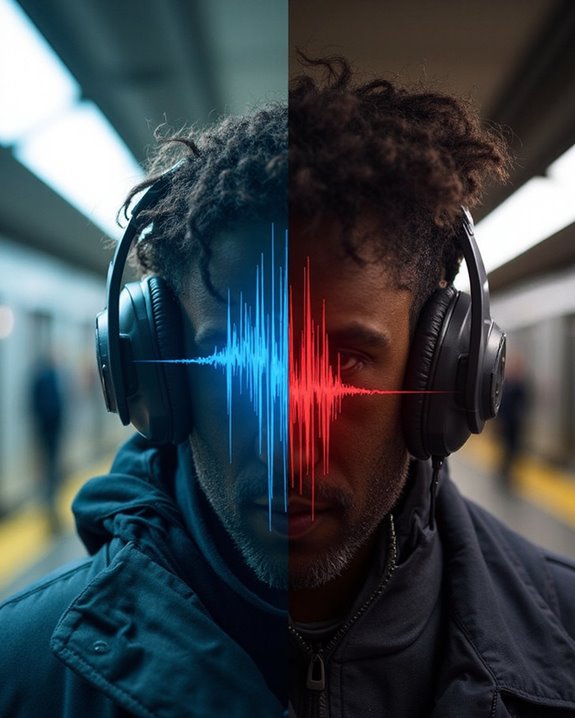
Active noise cancellation technology demonstrates a significant disparity in performance across the acoustic spectrum, with markedly superior capabilities when targeting low-frequency sounds. The Bass Effectiveness of most noise-cancelling headphones is exceptional, particularly with constant low-frequency noises like airplane engines or air conditioners that operate below 1 kHz.
In contrast, Treble Performance remains a technological challenge. Most ANC systems struggle to effectively cancel sounds above 1 kHz, though premium models from manufacturers like Bose have developed technology to address frequencies up to 10 kHz. This limitation explains why noise-cancelling headphones excel in environments with steady background noise but perform less impressively against high-pitched sounds like human voices or sudden noises.
For best hearing protection, users should understand these frequency-based limitations when selecting headphones for specific environments.
Safe Listening Practices When Using Noise-Canceling Headphones
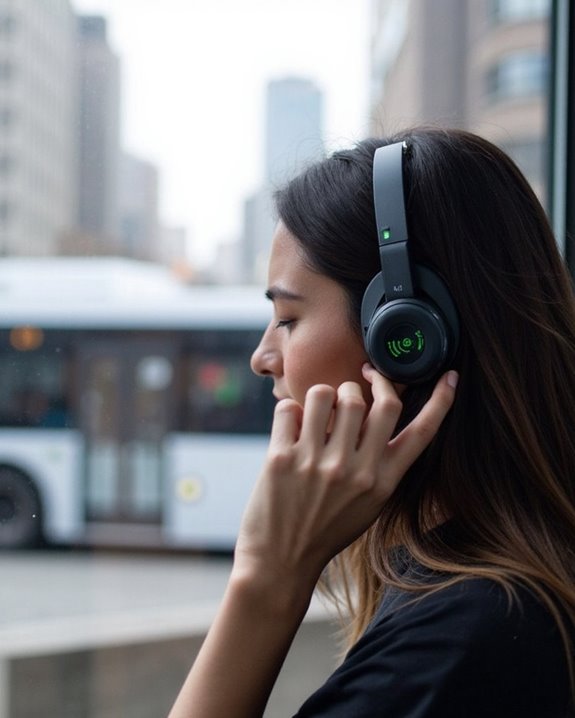
Despite their advanced sound isolation capabilities, noise-canceling headphones require deliberate usage practices to effectively protect hearing health. Experts recommend following the 60/60 rule—maintaining volume at 60% maximum capacity and implementing break routines after 60 minutes of continuous use, allowing the auditory system to reset.
Volume habits greatly influence long-term hearing protection. Users should resist “volume creep,” the tendency to gradually increase loudness in noisy environments. Noise-cancellation technology helps stabilize listening levels by reducing background interference, eliminating the need to compensate with higher volume.
Proper headphone fit enhances this protective effect, creating a seal that further isolates external sound. Over-ear models with cushioned cups typically offer superior noise isolation compared to on-ear alternatives, supporting lower volume settings while maintaining audio clarity.
Recommended Products

NOISE CANCELLING HEADPHONES: Effortlessly combines noise cancellation technology with passive features so you can shut off the outside world, quiet distractions, and take music beyond the beat

Powerful Noise Cancelling Technology: KVIDIO Active noise cancelling headphones block out up to 95% of ambient noise. It could be a lifesaver from TV, podcasts, and traffic noise while studying or working from home, so you concentrate on what’s important to you

All-Day Comfort & Premium Design: Crafted with high-quality materials, these over-ear wireless headphones combine luxury with long-wearing comfort. The adjustable headband ensures a secure fit for all head sizes, while ultra-soft memory foam ear cups minimize pressure. Lightweight and ergonomic, they're ideal for work, travel, or leisure—keeping you comfortable even during extended use
Real-World Benefits for Everyday Noise Exposure
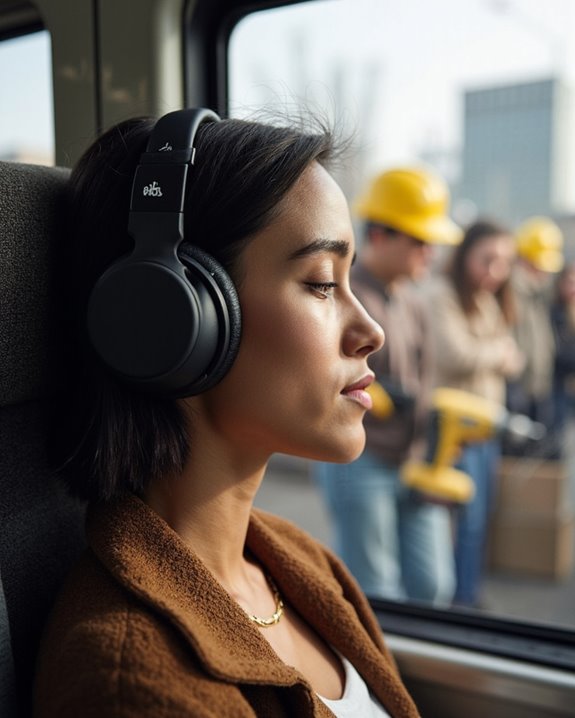
Noise-canceling headphones offer substantial protective benefits in everyday settings where ambient noise threatens long-term hearing health. They create quieter environments during daily commutes, effectively reducing the harmful impact of engine noise and urban soundscapes that can reach damaging levels over time.
These devices prove particularly valuable in social gatherings where background chatter and music often force individuals to increase their listening volumes to potentially harmful levels. By utilizing ANC technology, users can maintain lower, safer volume settings while still enjoying audio content clearly.
The consistent reduction in ambient noise exposure also decreases auditory fatigue and stress, contributing to overall hearing preservation. For professionals working in moderately noisy environments, these headphones provide a practical solution that supports both productivity and hearing health without requiring specialized hearing protection equipment.
Recommended Products

【Extremely Comfortable to Wear】: Wrap your child's ears in cloud-like softness! Dr.meter noise cancelling headphone is made of premium memory foam cores with PU leather padding, creating a breathable seal that stays cozy during monster jams, fireworks, concerts, or even long-term sports events. Designed for providing comfortable wearing—no itching or pressure marks!
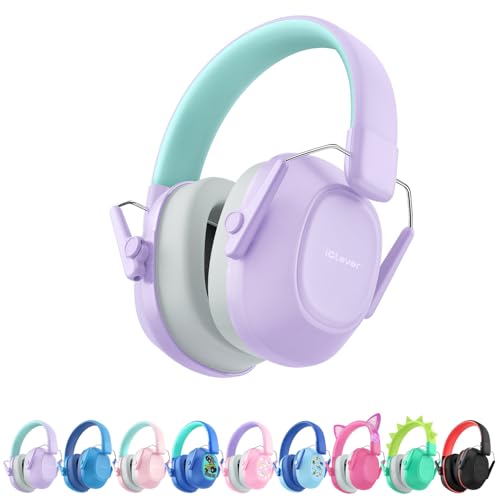
【Double-Certified Safety】Certified to ANSI S3.19-1974 & CE EN 352-1 for reliable hearing protection. We combined the 22mm porous sound-absorbing sponge and custom-made honeycomb acoustic sponge together to absorb and reduce noises while ensuring comfy wearing, achieving an SNR of 29dB and offering reductions up to 46dB under certain scenarios. Please note that earmuffs cannot 100% eliminate noise.

Constructed by solid ABS shell and thickened sound-absorbing foam, our earmuffs achieve SNR 27 dB noise-isolation, ANSI S3.19 (US) and CE EN352-1(EU) both certified, which can reduce sensory overload, perfect for kids with autism or sensory issues
Limitations in High-Intensity Sound Environments
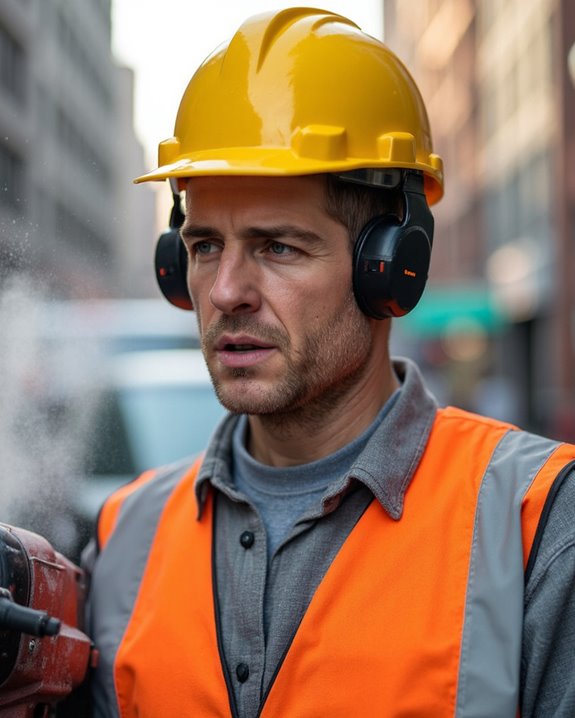
While offering significant benefits in everyday settings, high-intensity sound environments expose the fundamental limitations of noise-cancelling headphones as hearing protection devices. These limitations become particularly evident during intense workouts or loud events.
Workout drawbacks emerge when sudden high-frequency sounds—like weights dropping or instructors shouting—overwhelm the ANC technology, which primarily targets low-frequency noise. The technology cannot adapt quickly enough to counteract these unpredictable sounds.
Event shortcomings are similarly problematic at concerts or construction sites, where extreme volume levels exceed what noise-cancelling headphones can effectively manage. The combination of passive and active noise cancellation proves insufficient against sustained high-decibel environments.
In these scenarios, traditional hearing protection like earmuffs often provides more reliable protection, though they can be used alongside noise-cancelling headphones for enhanced low-frequency reduction.
Recommended Products

Efficient Hearing Protection: These noise canceling headphones are equipped with a double-layer sound-dampening foam and a composite housing that effectively reduces noise levels by SNR 34dB certified(ANSI S3.19 (US)). They excel at suppressing harmful noises, making them ideal for shooting activities as they reduce the noise to a safe and comfortable level.Generous space inside the ear cups ensure breathability meanwhile soft imitation leather provides a tight sound-proof seal

COMPACT MUFF: Designed for the smaller heads of youth and women shooters, these compact muffs feature a slim profile ensuring convenience & noise protection; Lightweight, foldable & adjustable, the earmuffs are suitable for female and younger shooters

Noise Reduction Rating (NRR) of 30 dB*
Making Informed Choices for Your Hearing Health
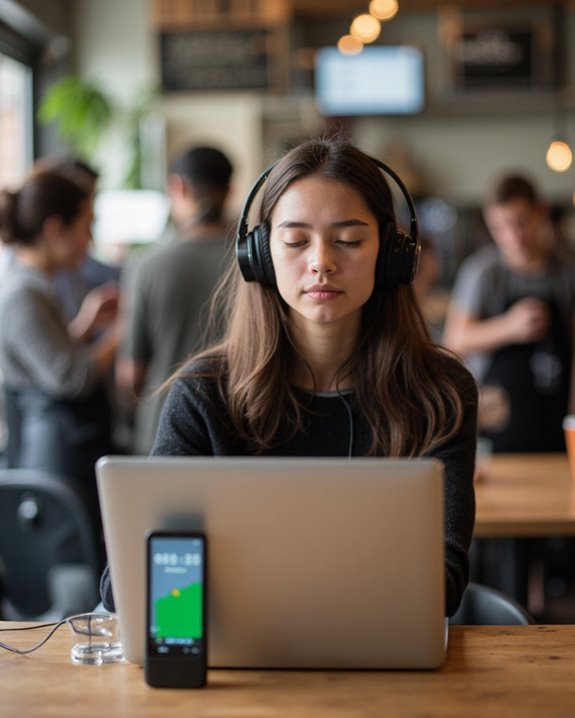
As individuals navigate the complex landscape of hearing protection options, understanding how to make informed decisions becomes essential for long-term auditory health. When selecting noise cancelling headphones, consumers should realistically assess their needs based on their typical noise exposure environments and personal Hearing Genetics, which may predispose some to greater noise sensitivity.
Integrating ANC headphones into broader Wellness Routines represents a balanced approach. This includes:
- Using certified hearing protection in high-noise environments
- Taking regular breaks during extended headphone use
- Maintaining volume levels below 60% of maximum capacity
- Monitoring listening duration (less than 60 minutes continuously)
The most effective strategy combines appropriate technology with healthy listening habits, acknowledging that noise cancelling headphones offer benefits but cannot replace thorough hearing conservation practices in high-risk settings.
Recommended Products

【Extremely Comfortable to Wear】: Wrap your child's ears in cloud-like softness! Dr.meter noise cancelling headphone is made of premium memory foam cores with PU leather padding, creating a breathable seal that stays cozy during monster jams, fireworks, concerts, or even long-term sports events. Designed for providing comfortable wearing—no itching or pressure marks!

Effective Hearing Protection: Suitable for 3-15 year old kids. The toddler noise reduction headphones muffle noise to prevent hearing damage; It is a perfect gift for children who have sound sensitivities for airplane flights, monster jam, sports events, Disneyland, concerts, movie theaters, fireworks, etc.

Reliable Passive Hearing Protection: The ear muffs achieve NRR 28 dB (SNR 34 dB) rating, ANSI S3.19 (US) certified. It efficiently muffles loud noise from power tools, lawn mowers, snoring and everyday ambient sounds to safeguard your hearing all day long
Frequently Asked Questions
Can Noise-Canceling Headphones Help With Tinnitus Symptoms?
Noise-canceling headphones can help manage tinnitus symptoms by reducing ambient noise, allowing individuals to focus on relaxation techniques. While they don’t address underlying tinnitus causes, they may create a more controlled auditory environment for some sufferers.
How Long Do Noise-Canceling Headphone Batteries Typically Last?
Like digital sandglasses, noise-canceling headphones’ Battery Lifespan varies greatly, typically ranging from 20-60 hours. Premium models last longer, while Charging Methods have evolved to include quick-charge USB-C options for user convenience.
Are Noise-Canceling Headphones Safe for Children to Use?
Noise-canceling headphones are generally safe for children when used with appropriate volume limits. Pediatric usage should be monitored, and child safety considerations include selecting age-appropriate designs and ensuring proper fit for smaller ears.
Do Noise-Canceling Headphones Interfere With Hearing Aids?
Noise-canceling headphones can present interference risks with hearing aids due to acoustic overlap and physical space constraints. Compatibility tips include considering bone conduction alternatives, adjusting audio settings, and consulting with hearing specialists about ideal configurations.
Can Extended Use of Noise-Canceling Technology Affect Hearing Sensitivity?
Cutting to the chase, extended use of noise-canceling technology doesn’t inherently affect hearing sensitivity. However, some users report temporary ear fatigue and sound adaptation issues that typically resolve after taking breaks from usage.